Dates: May 15, 16, 17
Time: 9:00 - 10:30 PM (4 hours and 30 minutes)
Location: Sarasota, FL
Sky conditions: Mostly clear
Instruments used: binoculars and Sky Map app
Bright stars and objects noted: Alphard, M44, Spica, Regulus, Gamma Leonis
Constellations noted: Hydra, Cancer, Virgo, Leo
Monday, May 18, 2015

Friday, May 15, 2015
APOD 4.8
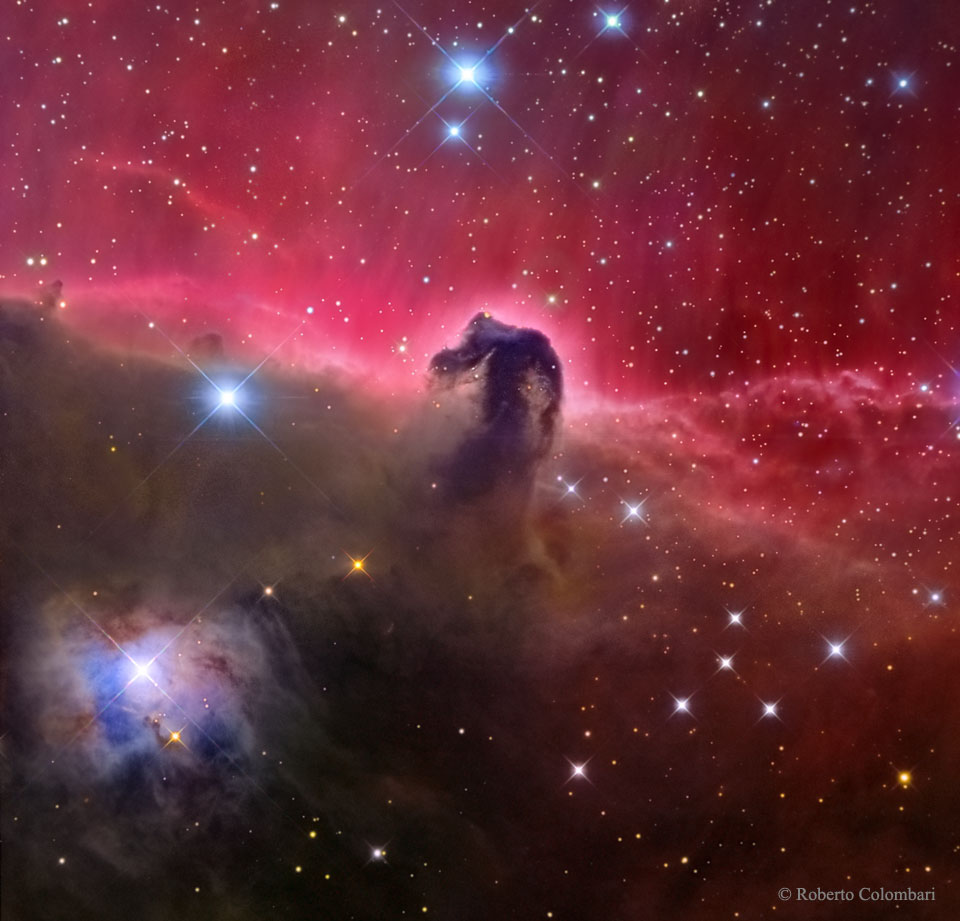
The Horsehead Nebula is 1,500 light years away in the Orion cloud complex. It's an interstellar dust cloud sculpted by winds and radiation. It is cataloged as Barnard 33 and can only be seen as it is against the red glow of emission nebula IC 434. The shape of the nebula is really cool.
Sunday, May 10, 2015
Observation Post
Date: May 8, 2015
Time: 8:30-10:30 PM
Location: Sarasota, FL
Sky Conditions: Mostly clear
Instruments Used: Binoculars and Sky Map app
Bright Stars noted: Regulus, Gamma Leonis, Castor, Pollux, Alphard, Arcturus
Constellations noted: Leo, Leo Minor, Gemini, Bootes, Hydra
Time: 8:30-10:30 PM
Location: Sarasota, FL
Sky Conditions: Mostly clear
Instruments Used: Binoculars and Sky Map app
Bright Stars noted: Regulus, Gamma Leonis, Castor, Pollux, Alphard, Arcturus
Constellations noted: Leo, Leo Minor, Gemini, Bootes, Hydra
Friday, May 8, 2015
APOD 4.7
An Unexpected Aurora Over Norway: http://apod.nasa.gov/apod/ap150504.html

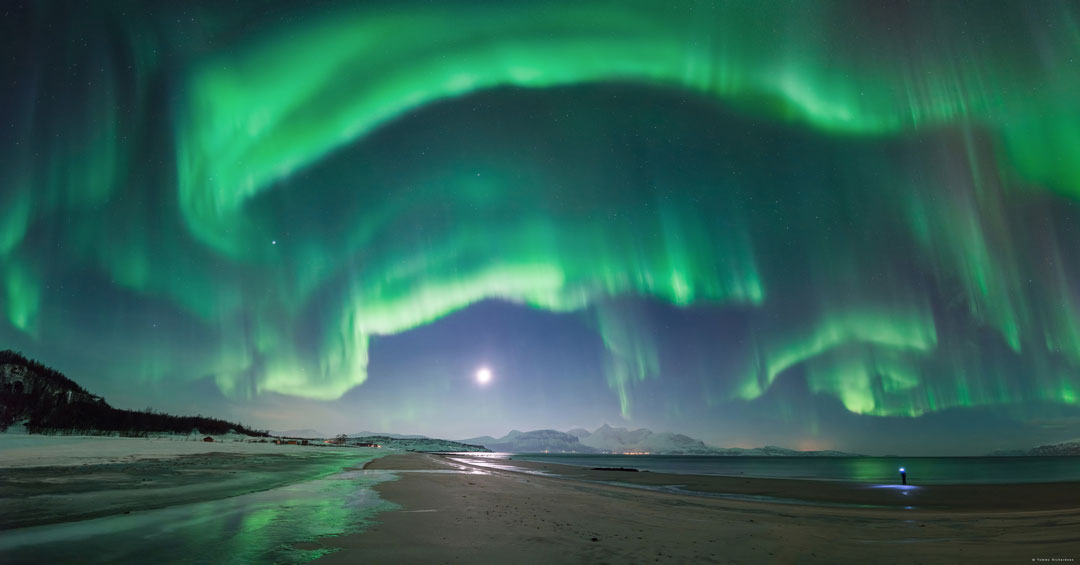
On February 8, 2014 this photo was taken in Norway. Despite being on a trip to photograph auroras, the skies had been disappointing. They started to pack up to leave, when suddenly a huge aurora ignited throughout the sky. The auroral flare only lasted a few minutes, but it was spectacular. I like how the moon can be seen in the center of the photo.
Sunday, May 3, 2015
Observation Post
Date: May 1, 2015
Time: 9:00 PM - 11:00 PM
Sky conditions: Some clouds
Instruments used: binoculars and Sky Map app
Bright Stars and Objects noted: Regulus, Gamma Leonis, Alphard, Castor, Pollux
Constellations noted: Leo, Gemini, Leo Minor, Hydra
Time: 9:00 PM - 11:00 PM
Sky conditions: Some clouds
Instruments used: binoculars and Sky Map app
Bright Stars and Objects noted: Regulus, Gamma Leonis, Alphard, Castor, Pollux
Constellations noted: Leo, Gemini, Leo Minor, Hydra
Friday, May 1, 2015
APOD 4.6
Comet Churyumov Gerasimenko in Crescent: http://apod.nasa.gov/apod/ap150429.html

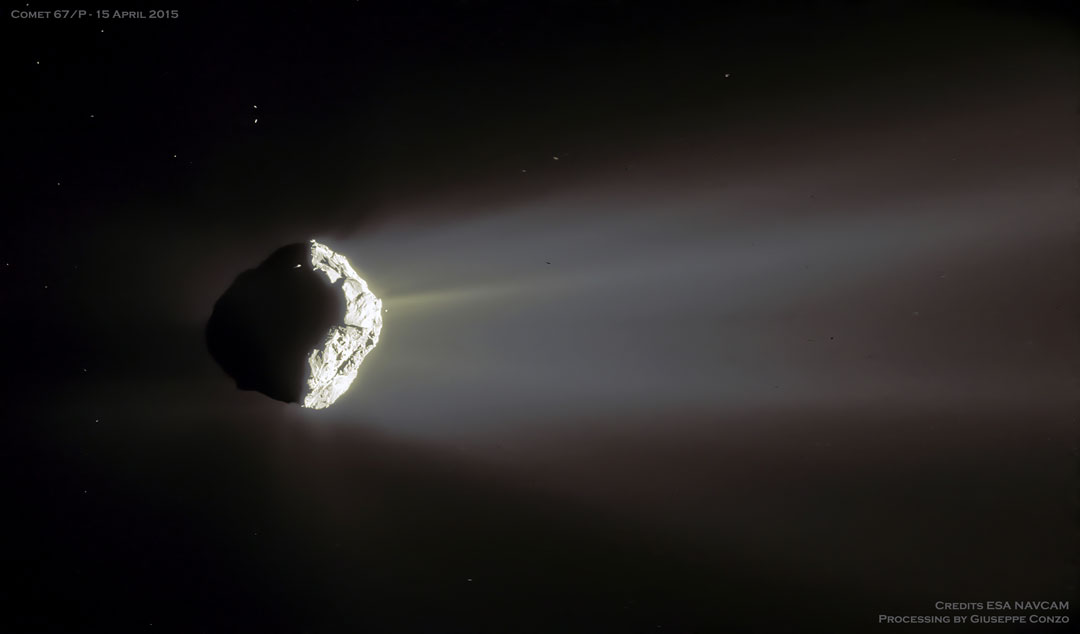
As the 3-km wide comet is moving closer to the sun, the heat is causing the nucleus to expel gas and dust. Last July the Rosetta spacecraft arrived and is now orbiting the Sun with the giant iceberg. The Rosetta spacecraft has indicated that the water coming from the comet is unlike the water on Earth, which means water could not have originated from ancient collisions with comets like 67P. A magnetic field has not been detected around the comet, which indicates that magnetism could have been unimportant to the evolution of the Solar System at first.
As the 3-km wide comet is moving closer to the sun, the heat is causing the nucleus to expel gas and dust. Last July the Rosetta spacecraft arrived and is now orbiting the Sun with the giant iceberg. The Rosetta spacecraft has indicated that the water coming from the comet is unlike the water on Earth, which means water could not have originated from ancient collisions with comets like 67P. A magnetic field has not been detected around the comet, which indicates that magnetism could have been unimportant to the evolution of the Solar System at first.
Friday, April 17, 2015
APOD 4.4
One-Armed Spiral Galaxy NGC 4725: http://apod.nasa.gov/apod/ap150416.html

RGBpugh1024.jpg)
Most spiral galaxies have two or more arms, but NGC 4725 only has one. The galaxy is composed of bluish, newborn star clusters and red tinted star forming regions with a single spira mirabilis winding out. NGC 4725 is over 100 thousand light-years across and is located 41 million light-years away in Coma Berenices. This photo is cool because you can also see another galaxy in the upper right corner.
Friday, April 10, 2015
APOD 4.3
NGC 2903: A Missing Jewel in Leo

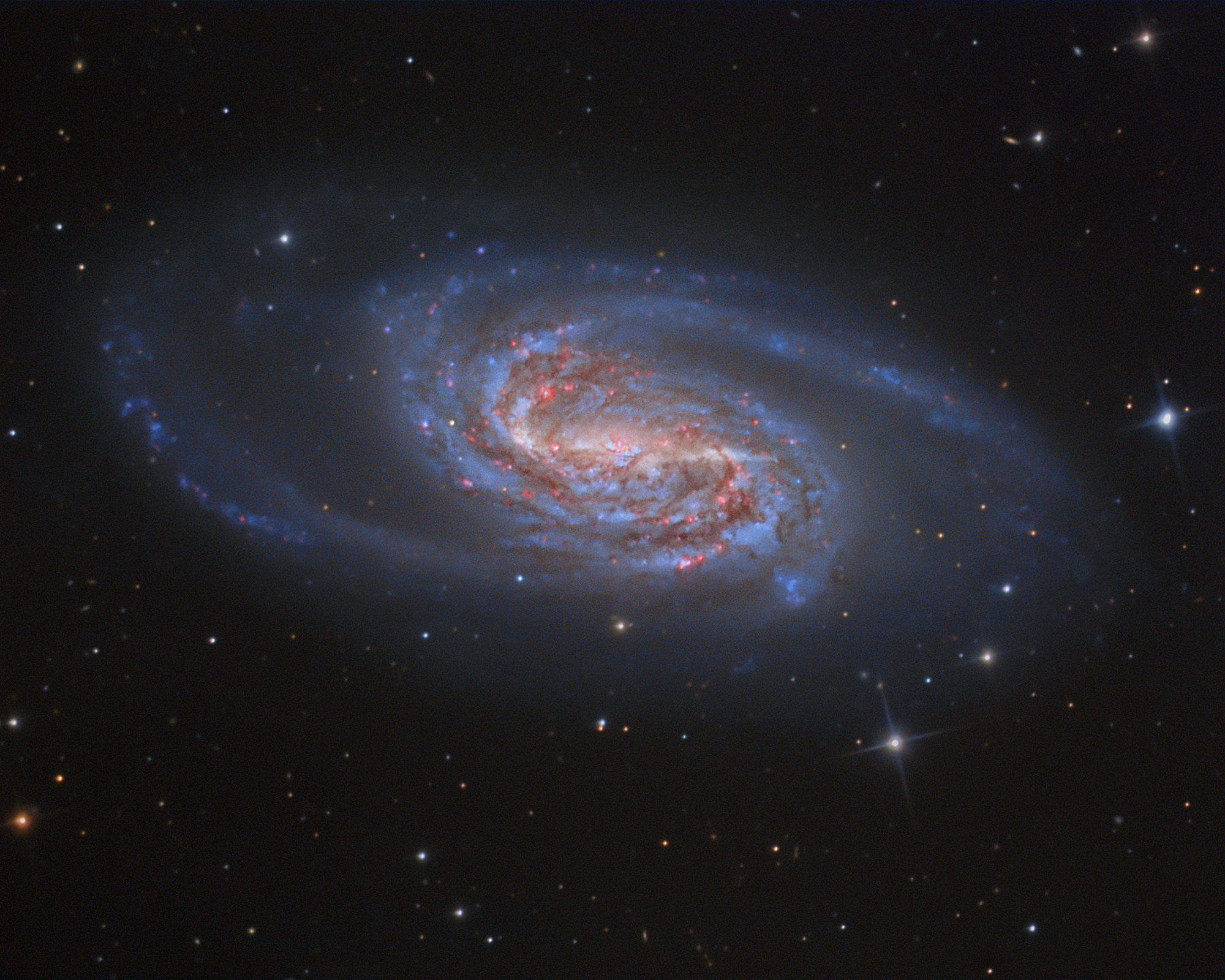
NGC 2903 is a barred spiral galaxy about 20 million light years away. It is surprisingly missing from the Messier catalog despite being one of the brighter objects in the sky. It can be seen within the constellation of Leo, near the top of the lion's head. Its bright core is an amazing mix of old and young clusters with immense dust and gas clouds. NGC 2903 is abuot 80,000 light years across.
Thursday, April 2, 2015
APOD 4.2
A Flag Shaped Aurora Over Sweden: http://apod.nasa.gov/apod/ap150330.html

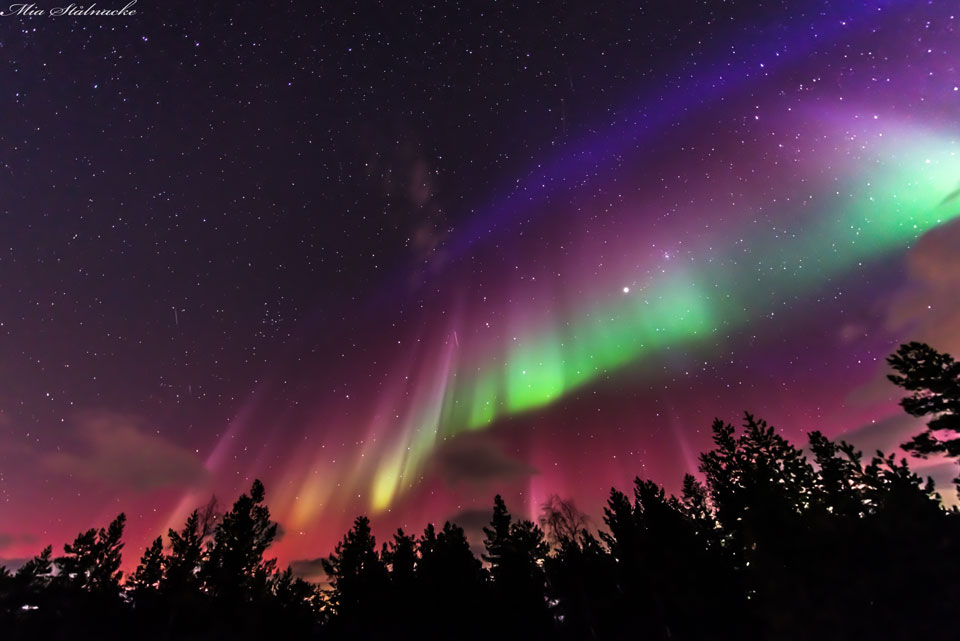
In mid-March, a Coronal Mass Ejection led to one of the most intense geomagnetic storms of recent years. The result was many auroras appearing over countries near Earth's poles. This image was taken of a 50 km tall aurora appearing over Sweden. Colorful auroras are likely to continue, but this one is unusual as it is super straight, comparative to a flag.
Friday, March 27, 2015
APOD 4.1
NGC 2403 in Camelopardalis: http://apod.nasa.gov/apod/ap150327.html

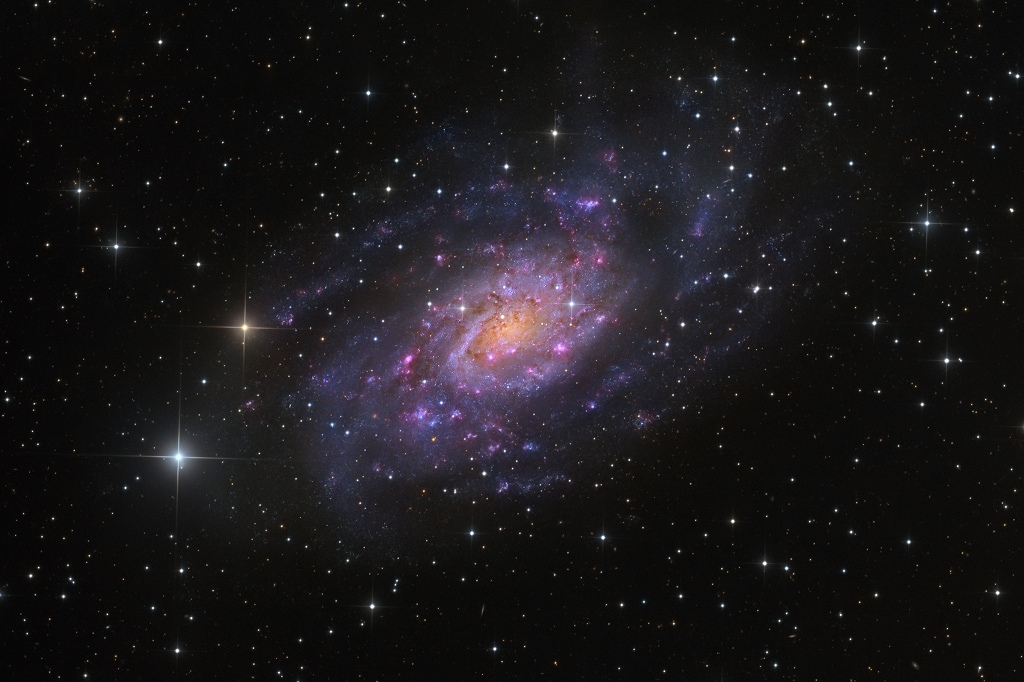
NGC 2403 is a spiral galaxy seen in Camelopardalis. It is some ten million light year distant and 50,000 light years across. Marked by the reddish glow of hydrogen gas, NGC 2403 has giant star forming HII regions. The stars explode as bright supernovae at the end of their lives. The bright stars in the foreground are part of our own galaxy, the Milky Way.
Sunday, March 22, 2015
Observation: February 21st aka Astronomy Night
Time: 6:30-7:30 (2 Hours)
Place: Pine View School
Sky Conditions: Cloudy
Instruments Used: Night Sky App, Binoculars, variety of telescopes
Bright Stars noted: Gamma Andromeda, Aldebaren, Betelgeuse, Rigel, Castor, Pollox
Constellations noted: Gemini, Pegasus, Orion, Taurus
Friday, March 20, 2015
APOD 3.8
Earth During a Total Eclipse of the Sun: http://apod.nasa.gov/apod/ap150318.html

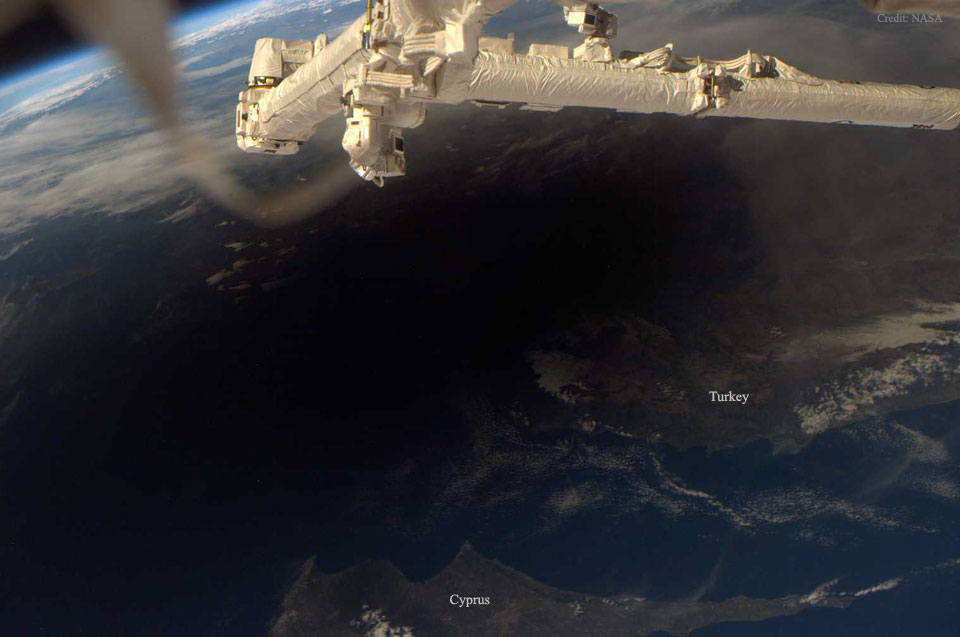
During a total solar eclipse, the moon's shadow creates a dark region on Earth. The shadow spot moves across Earth at nearly 2,000 km per hour, darkening the areas for only minutes at a time. This photo was taken during March 2006 from the International Space Station. This apod is perfect timing because today there will be a total solar eclipse!
Friday, March 6, 2015
APOD 3.7
Cometary Globule CG4: http://apod.nasa.gov/apod/ap150306.html

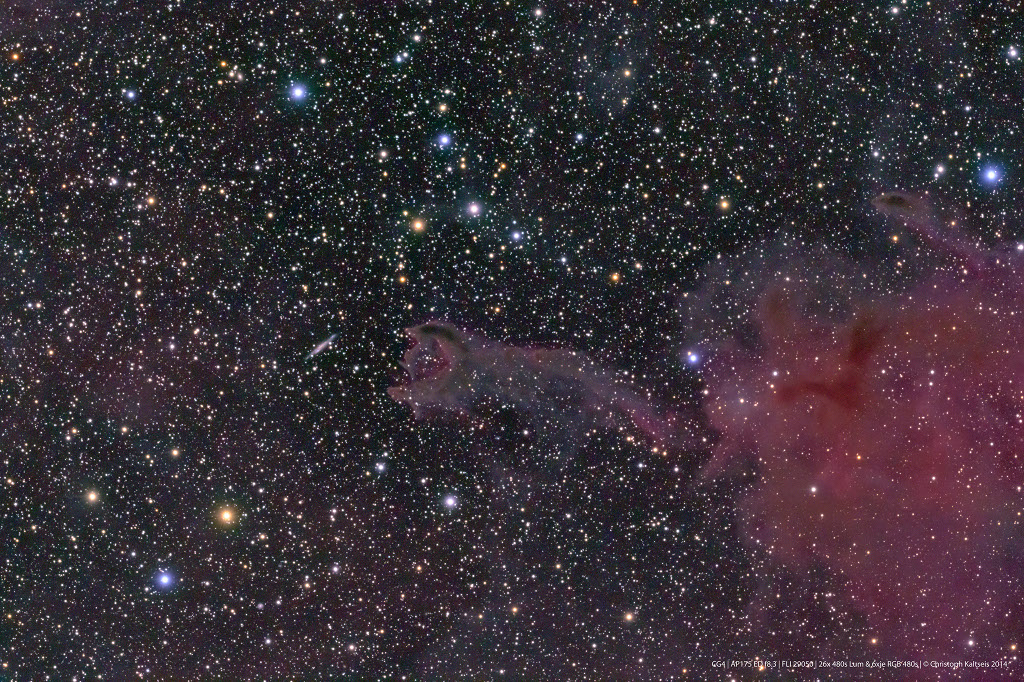
Cometary globule CG4 is about 1300 light-years from Earth near the constellation Puppis. Its head is about 1.5 light-years in diameter and its tail is about 8 light-years long. The dusty cloud contains enough material to form several Sun-like stars. Its tail comes away from the Vela Supernova remnant near the center of the Gum Nebula.
Thursday, March 5, 2015
APOD 3.6
Love and War by Moonlight: http://apod.nasa.gov/apod/ap150226.html

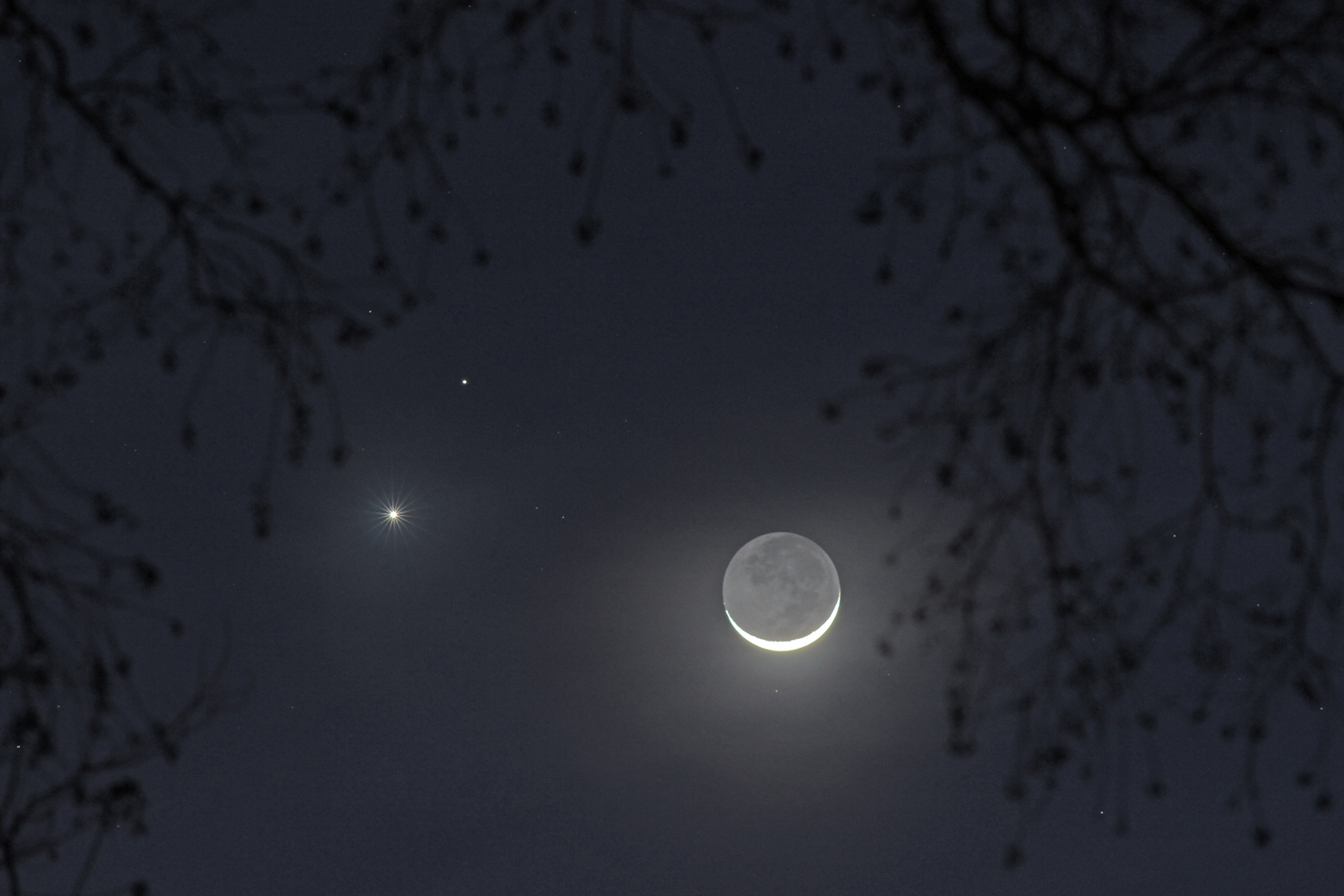
Venus and Mars came together near the moon on February 20. This image was taken in Charleston, South Carolina using the three second time exposure. The Moon has since moved from this triple conjunction, but Venus can still be seen as the third brightest object in Earth's sky. The triple conjunction is slowly becoming more distant from each other.
Monday, March 2, 2015
Planetary Nebulae
![[Egg]](http://www.noao.edu/image_gallery/images/crl2688a.gif)
The Egg Nebula: Believed to be a proto-planetary nebula, representing the transition to the planetary nebula phase. It is part of Cygnus, although distance is uncertain it is probably 3000 light years away

Ring Nebula, M57: Located in Lyra about 2,300 light-years away from Earth. It is an example of a bipolar nebulae.

Medusa Nebula, Abell 21: An old planetary nebula about 1,500 light-years away in Gemini. It is estimated to be over 4 light-years across.

Sharpless 2-188: It found in the constellation Cassiopeia. It is about 9' in diameter and 2800 light years distant.

Soap Bubble Nebula: Located in the constellation of Cygnus, not far from the Crescent Nebula.

The Dumbbell Nebula, M27: The nebula is about 850 light-years away and 1.5 light-years across. It is located in Vulpecula.

The Owl Nebula, M97: One of the more complex planetary nebulae and it is located in the constellation Ursa Major. It is located approx. 2030 light years away and is about 8,000 years old.

M46: A rich open star cluster in the constellation Puppis. Within a diameter of 30 light-years at its distance of 5400 light years, it contains over 150 bright stars.

The Ear Nebula: A bipolar planetary nebula in the constellation of Cygnus. It is about 6' long.

NGC40: Located in Cepheus, about 4000 light-years away from Earth.
Friday, February 27, 2015
Henrietta Leavitt

Henrietta Swan Leavitt was born on July 4th, 1868 in Cambridge, Massachusetts to George Roswell Leavitt and Henrietta Swan. She attended Oberlin College and graduated from the Society for Collegiate Instruction of Women, later called Radcliffe College. While in college, she studied classical Greek, fine arts, philosophy, calculus, and geometry. Leavitt did not even take an astronomy class until her fourth year of college. After graduation, she suffered a seriously dangerous disease that left her severely deaf.
In 1895, she began to volunteer at the Harvard College Observatory. Edward Charles Pickering appointed Henriette Leavitt to a permanent position seven years later. She eventually became the head of the photography photometry department, which studied images of stars to determine their magnitude. Throughout her career, she discovered more than 2,400 variable stars, which is half of the known total in her day. Her work led to the cepheid variable period-luminosity relationship. Leavitt discovered a direct correlation between the time it took a star to go from bright to dim to how bright it actually was through the intense observation of the cepheids. This relationship helped other astronomers with their own discoveries.
Leavitt created a standard of photographic measurements that was accepted by the International Committee on Photographic Magnitudes, which became known as the Harvard Standard, in 1913. She used 299 plates from 13 telescopes and used logarithmic equations to organize stars in a range of over 17 magnitudes of brightness.
She worked at the Harvard College Observatory until her death from cancer in 1921.
Friday, February 20, 2015
Sources
Works Cited
Mariani, Gael. "Henrietta Leavitt – Celebrating the Forgotten Astronomer | AAVSO." AAVSO. N.p., n.d. Web. 20 Feb. 2015. <http://www.aavso.org/henrietta-leavitt-%E2%80%93-celebrating-forgotten-astronomer>.
"1912: Henrietta Leavitt Discovers the Distance Key." 1912: Henrietta Leavitt Discovers the Distance Key. Carnegie Institution for Science, n.d. Web. 20 Feb. 2015. <https://cosmology.carnegiescience.edu/timeline/1912>.
PBS. PBS, n.d. Web. 20 Feb. 2015. <http://www.pbs.org/wgbh/aso/databank/entries/baleav.html>.
APOD 3.5
An Evening Sky Conjunction: http://apod.nasa.gov/apod/ap150220.html

A pairing of the moon and Venus can be seen in this eight year old photo. Seen near the western horizon, this conjunction can be seen reflecting in the water in Bolu, Turkey. Venus has orbited the Sun at least 13 times since this photo was taken meaning that a similar conjunction can be seen tonight. The only difference is tonight the conjunction will also have a fainter Mars nearby.
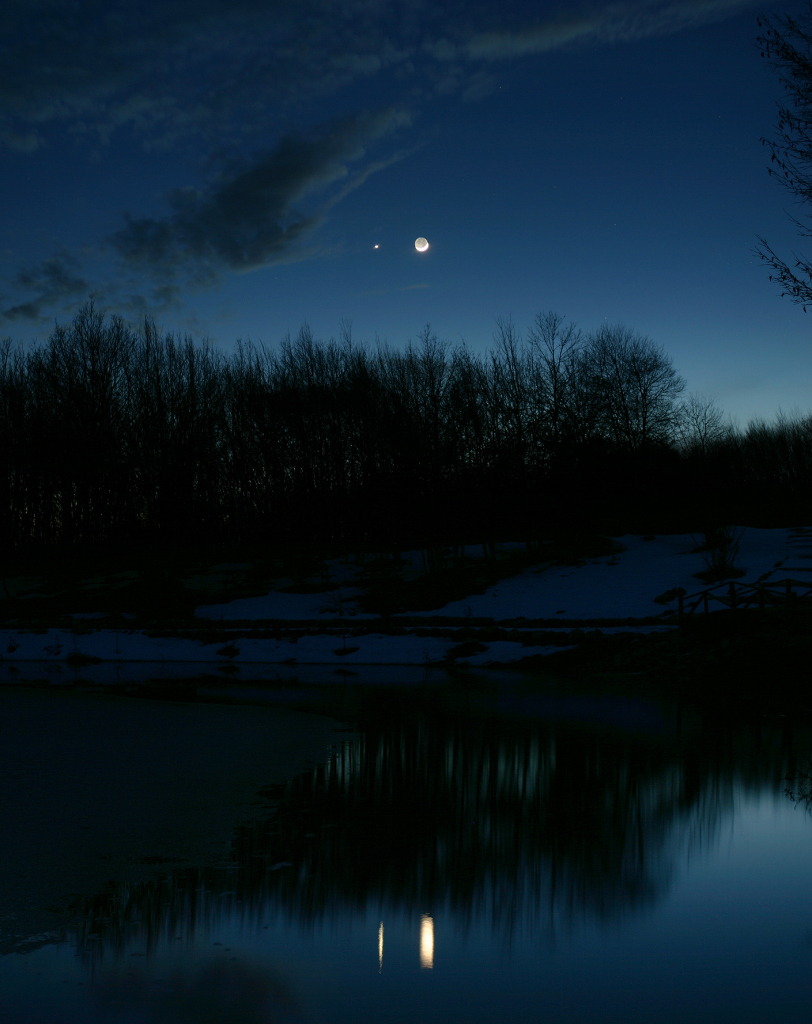
A pairing of the moon and Venus can be seen in this eight year old photo. Seen near the western horizon, this conjunction can be seen reflecting in the water in Bolu, Turkey. Venus has orbited the Sun at least 13 times since this photo was taken meaning that a similar conjunction can be seen tonight. The only difference is tonight the conjunction will also have a fainter Mars nearby.
Friday, February 13, 2015
APOD 3.4
M100: A Grand Design Spiral Galaxy- http://apod.nasa.gov/apod/ap150211.html

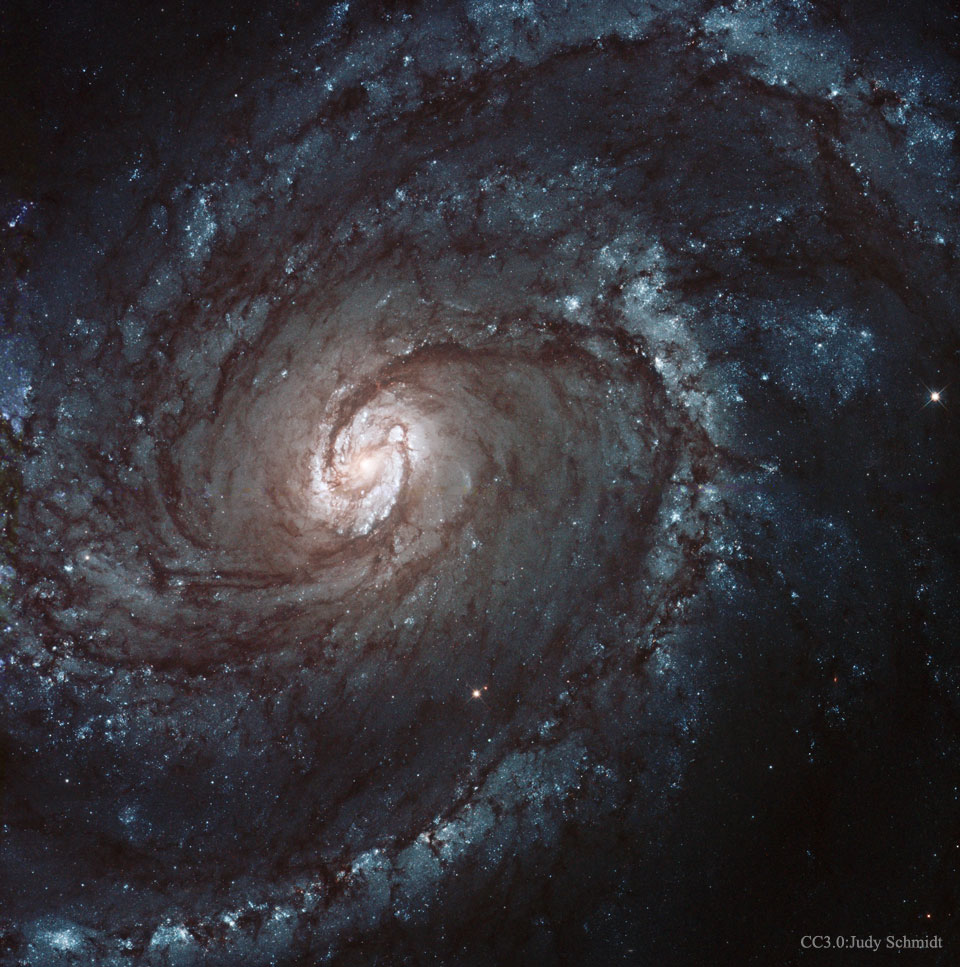
M100 is a large spiral galaxy of over 100 billion stars with well-defined spiral arms. It is comparable to our own Milky Way Galaxy. M100 is 56 million light years distant toward Berenice's Hair. Bright blue star clusters and dust lanes can be seen in this image of the galaxy from 2009. A light echo from a bright supernova can be seen in the photo too. This galaxy is truly stunning.
Thursday, February 12, 2015
Star Formation
http://apod.nasa.gov/apod/ap040713.html
http://news.discovery.com/space/astronomy/baby-stars-are-ripping-their-stellar-nursery-to-shreds-140702.htm
http://www.cnet.com/news/swirling-spiral-galaxy-spotted-by-space-telescope/
http://www.natureworldnews.com/articles/8465/20140808/stellar-nursery-reveals-details-about-birth-of-the-sun.htm
http://news.discovery.com/space/astronomy/baby-stars-are-ripping-their-stellar-nursery-to-shreds-140702.htm
http://www.cnet.com/news/swirling-spiral-galaxy-spotted-by-space-telescope/
http://www.natureworldnews.com/articles/8465/20140808/stellar-nursery-reveals-details-about-birth-of-the-sun.htm
Subscribe to:
Posts (Atom)